Research
Since the origins of the earliest eukaryotes, life has never existed in isolation from microbes — and for many animals, microbes are their primary food source. We think this deep evolutionary history means that chemical signals from microorganisms are fundamental to nervous system function, and may have shaped the very origins of neuronal communication. To explore this, we use C. elegans as a genetically tractable model, combining worm and bacterial genetics, high-throughput behavioral screening, metabolomics, and live neural imaging to uncover how gut microbes and host tissues communicate chemically.

Intertissue Trafficking of Gut Metabolites
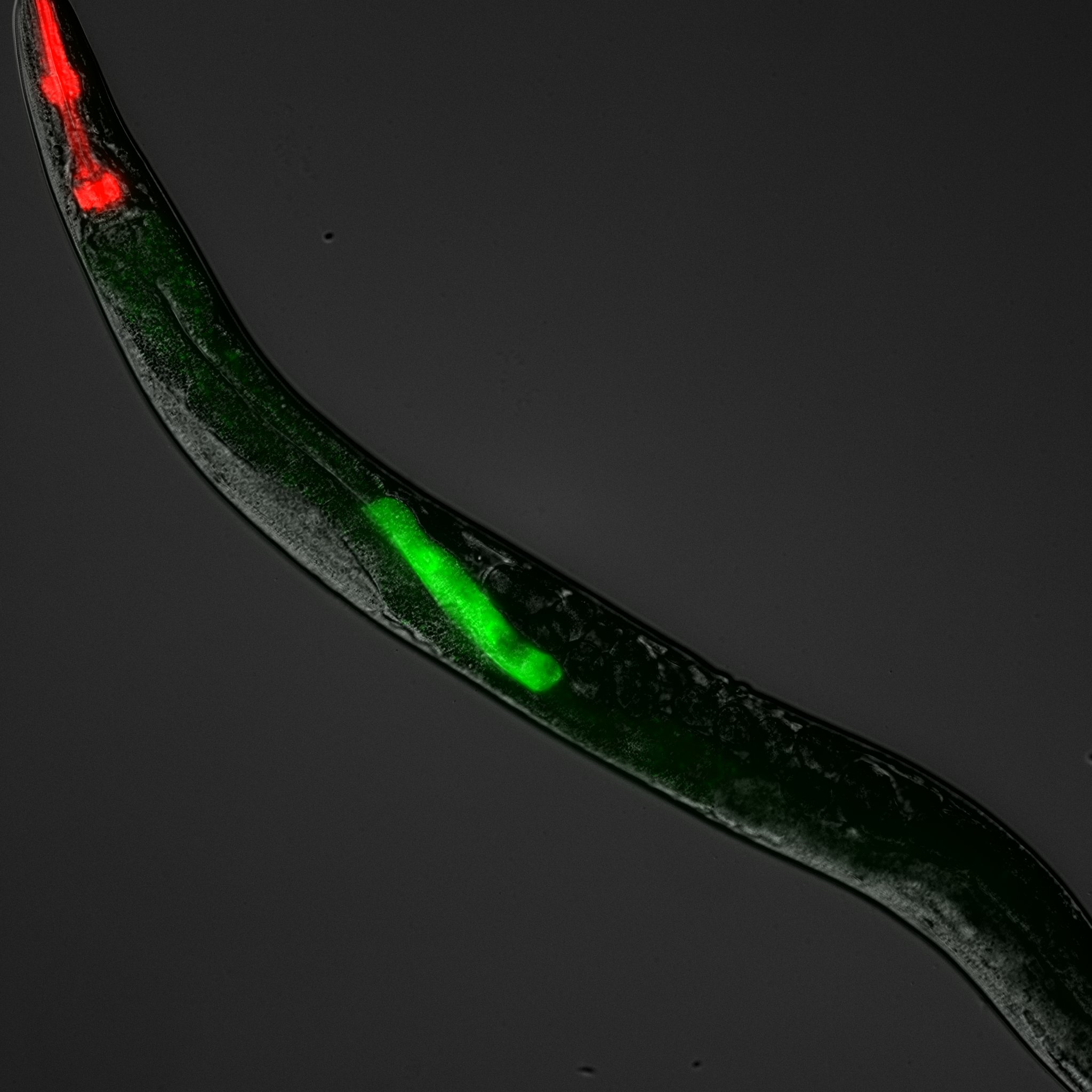
When Providencia bacteria colonize the C. elegans gut, they synthesize tyramine, which the worm converts to the neuromodulator octopamine. Elevated octopamine shifts how the animal perceives odors — directly coupling bacterial metabolism to host behavior (O'Donnell et al., Nature 2020).
Released neurotransmitters don't stay local. We found that octopamine is conugated to sugar in the intestine and is then modified with fatty acids that reflect the worm's recent dietary history — creating a chemical record that travels between tissues and is ultimately decoded by the nervous system. We are now mapping the broader landscape of glucosylated metabolites, from both microbial and host sources, that move through these intertissue routes to influence sensory decisions and behavior.
Chemical Signal Production & Sensation
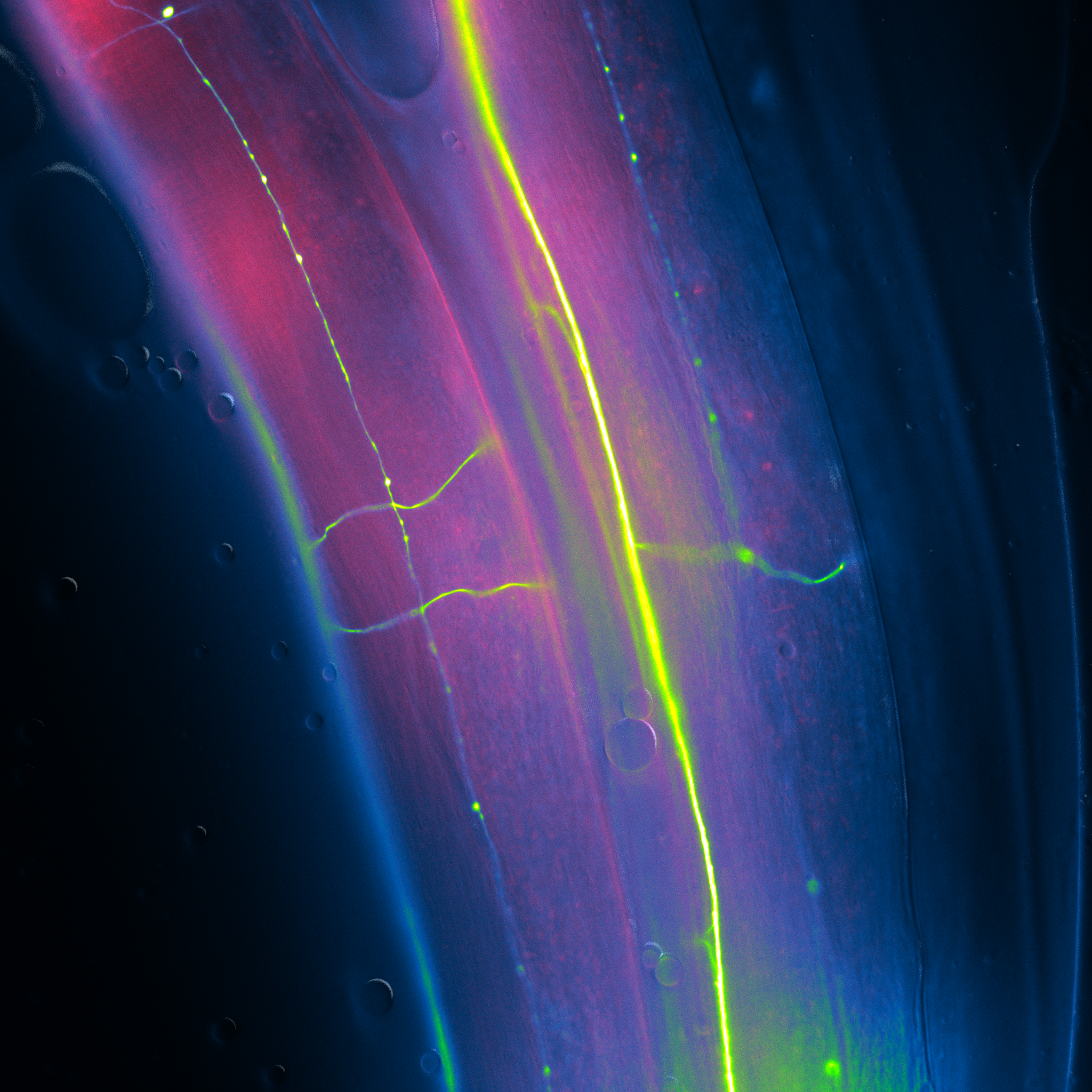
Pinpointing which microbial molecules activate specific host receptors is difficult in complex natural communities. To address this, we developed Flint 2.0, and new tools for generating C. elegans carrying stably integrated, cell-barcoded receptor libraries. With new genetic tools, we use these libraries to express distinct GPCRs in different worm cells, enabling receptor–ligand screens to be run directly in a living animal rather than in cultured cells.
We are using this platform to identify microbial activators of monoamine and opioid receptors, both of which govern hunger and food-seeking.
Feeding Behavior & Predator–Prey Dynamics
Bacteria that colonize the C. elegans gut gain access to a nutrient-rich environment and a mobile host that can carry and spread them. But the worm is also a predator - so there are both potential benefits and costs to the bacterial prey. We found that colonization by tyramine-producing bacteria makes worms more likely to seek out and feed on that same strain — a feedback loop with consequences for both host behavior and bacterial dispersal. We are systematically studying the factors that promote or inhibit food seeking after intestinal colonization, and the conditions that enable microbial dispersal via animal vectors.